Introduction
In high-tech commercial horticulture and hydroponic cultivation, managing the root zone is crucial to maximizing yield. Among the various substrate containers, coir-filled plastics have become the industry standard. However, growers often face a strategic choice between two main form factors: lay-flat Grow Bags (Slabs) and vertical Open Top Bags.
Both products utilize compressed coco peat mixtures inside UV-stabilized bags, but their geometry, space requirements, and crop suitability differ. Choosing the right option directly impacts crop spacing, irrigation setups, labor costs, and overall productivity.
What are Grow Bags (Slabs)?
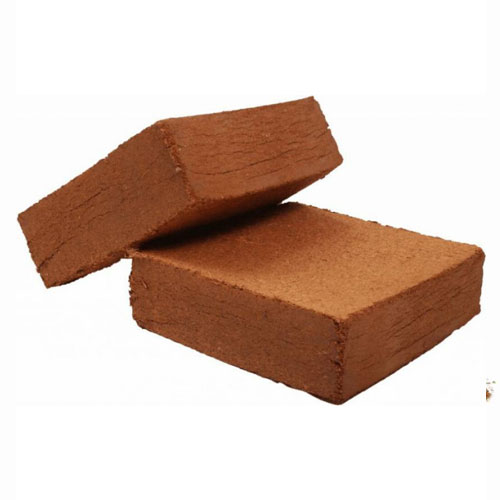
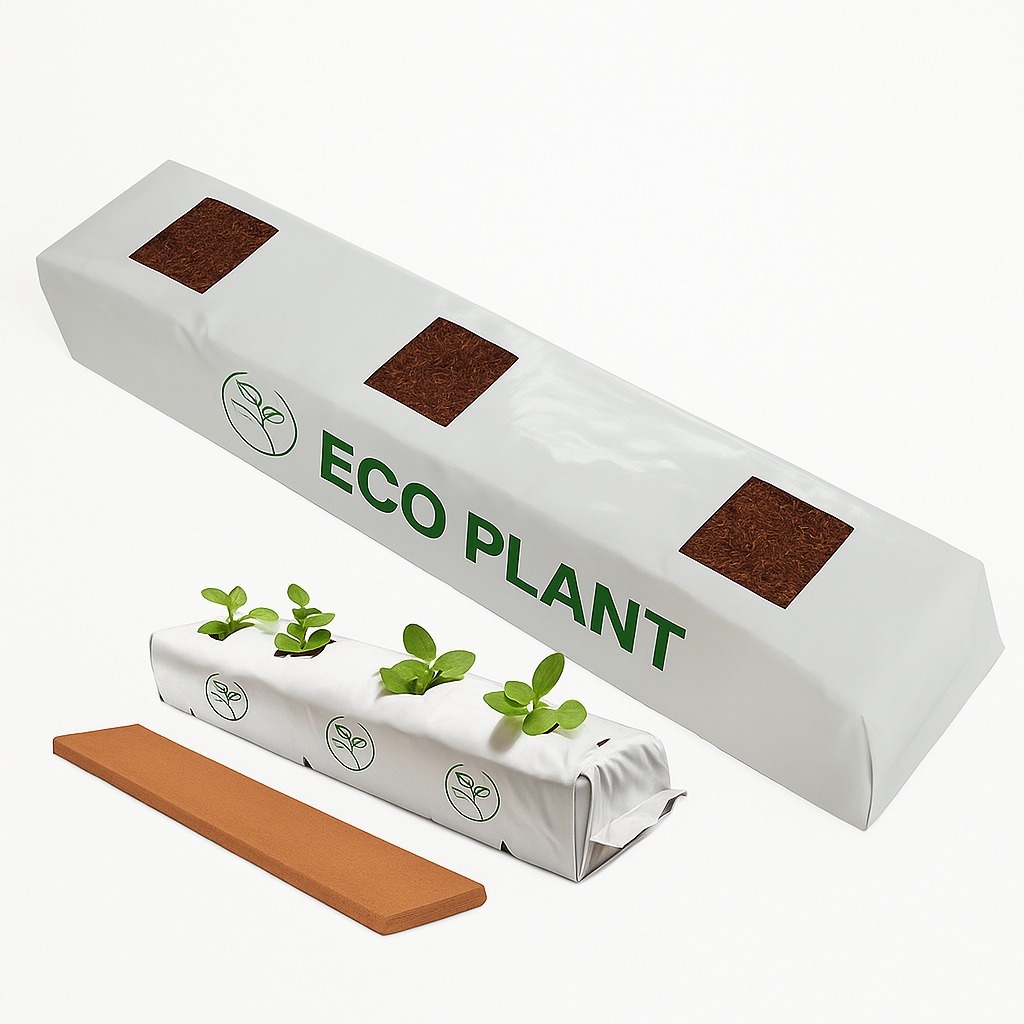
Horizontal grow bags (often referred to as coir planks or slabs) are long, lay-flat rectangular channels. The dry, highly compressed coco peat block is wrapped in a heavy-duty, co-extruded white-on-black polyethylene sleeve. Once hydrated, they expand into horizontal planks, typically measuring 100 cm to 120 cm in length.
Growers cut planting holes on the top and drainage slits at the bottom based on their crop layout. Slabs are commonly laid end-to-end on raised gutters, allowing multiple plants to share the same long container channel.
What are Open Top Bags?
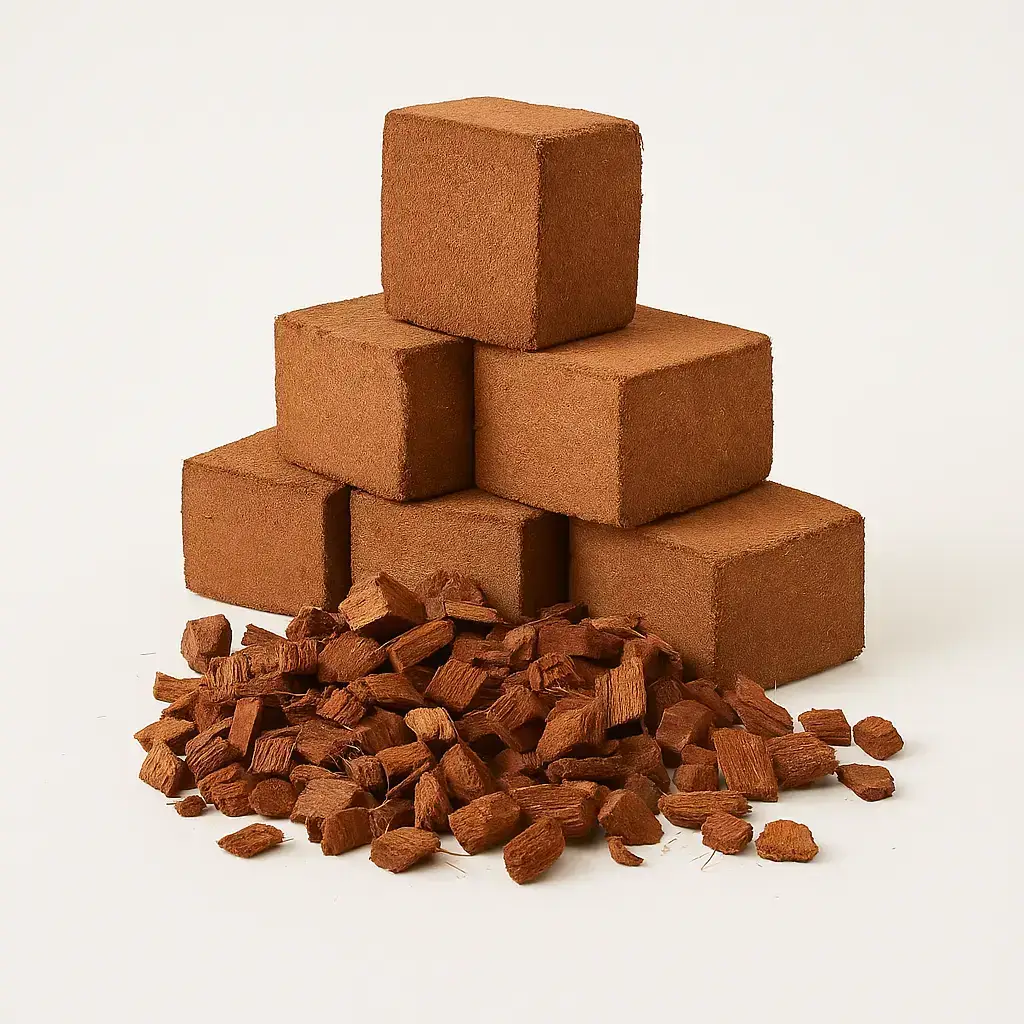
Open top grow bags are individual, vertical containers. They feature a compressed coir block pre-packaged inside a square or round plastic bag. The bag's top is completely open, functioning like a flexible pot. They are supplied flat, expanding vertically when watered to form container volumes typically ranging from 8 to 20 liters.
Unlike slabs, open top bags are completely modular, independent containers. Each plant occupies its own isolated grow bag, allowing flexible spacing adjustments on benches, gutters, or floors.
Key Differences
To choose between the two, commercial cultivators must evaluate four main structural factors:
- Irrigation Efficiency: Grow slabs allow shared drainage and uniform drip lines along a straight row. Open top bags require individual, localized drip pegs for each container.
- Root Isolation: In grow slabs, plants share the same channel, meaning roots intermingle. If one plant contracts a disease like Pythium, it can spread. Open top bags provide total root isolation.
- Space Utility: Slabs are optimized for long, uniform rows in large-scale greenhouses. Open top bags are better for irregular spaces, terrace layouts, or nursery benches.
- Handling & Setup: Open top bags are extremely quick to install since they are pre-punched and require no sleeve cutting. Slabs require manual slicing for plants and drainage.
Which One Suits Nurseries?
For plant propagation and young seedling nurseries, Open Top Bags are the clear winner. Nurseries require modular handling—plants are frequently moved, sorted by size, or sold individually. Slabs do not allow plants to be isolated or relocated without tearing the root network.
Open top bags allow nursery managers to space young seedlings closely together, then gradually spread the containers apart as canopy leaves grow, optimizing greenhouse floor space.
Which One Suits Commercial Growers?
For large-scale, high-yield vegetable crops like tomatoes, peppers, cucumbers, and strawberries, Grow Slabs (Planks) are preferred. These vine crops are cultivated in highly structured, permanent rows. Placing long slabs on hanging drainage gutters ensures all excess irrigation water is collected and recycled.
Sharing a larger substrate volume in slabs also buffers temperature fluctuations in the greenhouse, keeping root zone temperatures more stable than smaller, isolated pots.
For vine crops, use slabs containing a 70:30 coco peat to husk chips ratio to ensure proper drainage while maintaining moisture. For berry crops (like blueberries), open top bags with a high husk chip content (50%+) are ideal to prevent water-logging in multi-year crops.
How to Choose the Right Option
Ask yourself these questions to guide your purchase order:
- What is your crop type? Vine crops suggest slabs; soft fruits, potted plants, and nursery liners point to open tops.
- Do you recycle drainage water? If yes, slabs on gutters make collection simpler.
- Is root disease a high risk? If root isolation is vital, choose open top bags.
- What is your budget for labor? Open top bags require less prep labor, whereas slabs require setting up gutters and slicing bags.